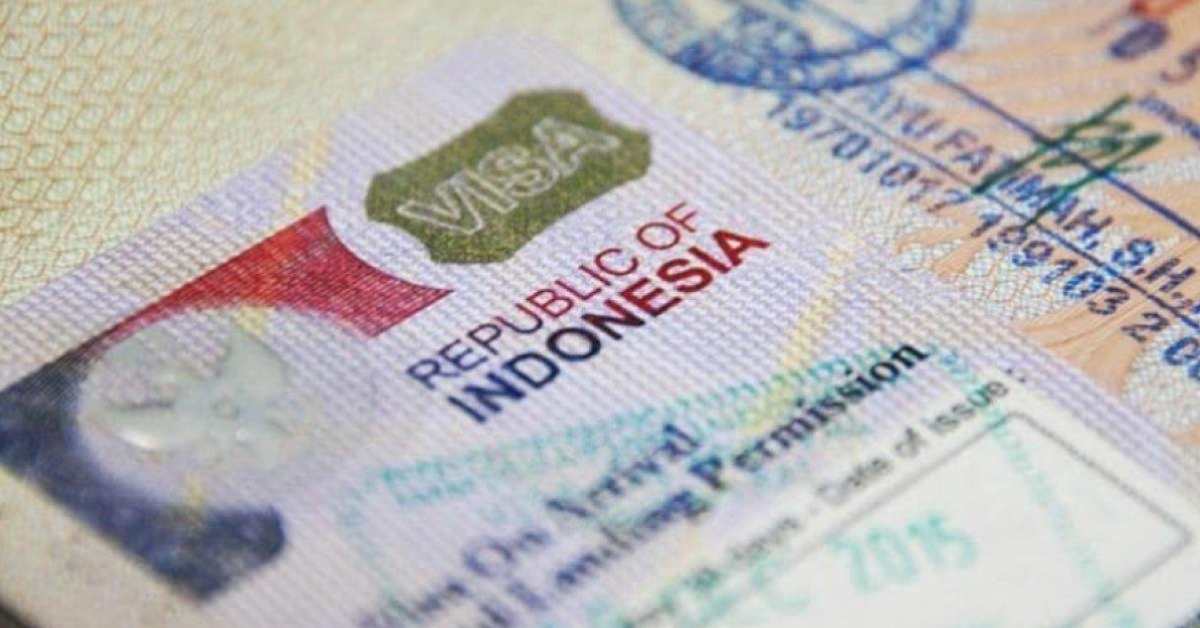


Entering Indonesia without the right visa is one of the most expensive mistakes a foreign visitor can make. Whether you are a tourist, a frequent business traveler, or a PT PMA owner managing investments in Southeast Asia’s largest economy, the visa rules in 2026 are stricter and more digitized than ever before.
This guide covers every visa type, residence permit, overstay penalty, government fee, and immigration rule you need to know before setting foot in Indonesia.
What Is a Tourist Visa Indonesia?
A tourist visa for Indonesia is an official entry document that lets foreign nationals visit for short-term leisure, social, or cultural purposes. The most commonly used option is the Visa on Arrival (VoA), which gives you 30 days on arrival and can be extended once for another 30 days. Indonesia also offers a fully digital version called the e-VoA (Electronic Visa on Arrival), which you can apply for online before you fly.
Neither the VoA nor the e-VoA allows you to work, earn income inside Indonesia, or run daily operations of a local company.
Do Foreigners Need a Visa to Enter Indonesia in 2026?
Yes — but which visa depends entirely on your nationality. Indonesia uses a tiered system: some nationalities enter visa-free, others qualify for a Visa on Arrival at the airport, and a smaller group must apply at an Indonesian embassy before traveling.
Regardless of your visa category, one rule applies to everyone: your passport must be valid for at least 6 months from your arrival date. Airlines may deny boarding if this requirement is not met.
Introduction to Indonesia Immigration 2026
Indonesia’s immigration system went through significant changes between 2024 and 2026. The government digitized its e-visa platform, updated fee structures, and tightened qualification requirements for investors and foreign workers.
Most notably, the old C-series permit index (C312, C313, C314) has been reclassified into the E-series (E23, E28A), which is now integrated with Indonesia’s Online Single Submission (OSS) platform — a cross-ministry digital system that validates applications in real time.
For PT PMA owners, choosing the wrong permit in this new framework can mean fines, business disruption, blacklisting, or deportation.
Do You Need a Visa for Indonesia?
Visa Exemption for ASEAN Countries
Citizens of all 10 ASEAN member states — Malaysia, Singapore, Thailand, the Philippines, Vietnam, Brunei, Cambodia, Laos, Myanmar, and Timor-Leste — enter Indonesia visa-free for up to 30 days. No fee, no advance application, and no embassy visit is required. Short-term business meetings are generally permitted under this exemption, but paid work is not.
The End of Global Visa-Free Travel
Indonesia does not offer blanket visa-free access to all nationalities. The country ended its short-lived universal visa-free experiment and now enforces a structured three-tier entry system. Non-ASEAN travelers typically fall under the Visa on Arrival category or must apply through an Indonesian embassy.
4 Purposes of Visit That Dictate Visa Selection
Your reason for being in Indonesia determines which visa you must hold. Getting this wrong carries real legal risk. The four main categories are:
- Tourism or social visits — leisure, culture, or visiting family
- Business activities — meetings, negotiations, and due diligence (no actual work permitted)
- Employment or professional operations — working inside or for an Indonesian company
- Investment management — owning shares in a PT PMA and directing company strategy
Types of Indonesian Visas Explained
1. Visit Visas (Index B) — 4 Types
Visit Visas are for short-term entries only and do not authorize formal employment or business operations. The four most relevant subtypes are:
- B211A (Social/Tourist Visit Visa): The most widely used option. Valid for 60 days. Covers tourism, social visits, and cultural activities. Extendable at an immigration office.
- B211B (Business Visit Visa): For meetings, conferences, and site inspections. Does not authorize operational work or income-generating activities.
- B213 (Government Visit Visa): Reserved for officially sanctioned government visits.
- B214 (Single-Entry Consular Visa): Must be obtained at an Indonesian embassy before arrival. Used for nationalities not eligible for a VoA.
2. Limited Stay Visas (KITAS/ITAS — Index C/E) — 4 Types
A KITAS (Kartu Izin Tinggal Terbatas), also referred to as an ITAS (Izin Tinggal Terbatas), is a long-term residence permit that allows foreigners to live legally in Indonesia for extended periods. The four most relevant types for foreign nationals and PT PMA owners are:
- C312 / E23 (Working KITAS): For foreign nationals employed by an Indonesian company. Requires a work permit (IMTA) and RPTKA approval from the Ministry of Manpower.
- C313 / E28A (Investor KITAS – 1 Year): For PT PMA shareholders. Valid for 1 year. No work permit or IMTA required.
- C314 / E28A (Investor KITAS – 2 Years): Same as C313 but valid for 2 years, ideal for long-term investors who want fewer renewals.
- C317 (Spouse/Dependent KITAS): For spouses or dependents of an active KITAS holder.
📌 2026 Update: The C-series has officially migrated to the E-series under Indonesia’s updated immigration framework. C312 is now E23, and C313/C314 fall under E28A. The old naming conventions are still understood by immigration offices and agents across Indonesia.
For a full breakdown of what living and working under a KITAS means day-to-day, read: What Is KITAS? A Complete Guide for Foreigners in Indonesia
3. Permanent Stay Visa (KITAP/ITAP)
A KITAP (Kartu Izin Tinggal Tetap), or ITAP (Izin Tinggal Tetap), is Indonesia’s permanent residence permit. It is generally available to foreigners who have legally lived in Indonesia for at least 5 consecutive years on a valid KITAS. Certain investors who have placed a minimum of IDR 15 billion in a PT PMA may qualify through an accelerated pathway.
KITAP holders enjoy the broadest rights of any foreign resident — including permanent residence without annual renewals, access to local financial services, and the ability to operate a business without switching permit types each year.
Visa on Arrival (VoA/e-VoA) Deep Dive
Eligibility & Duration
Indonesia’s Visa on Arrival is available to citizens of over 97 countries, including nationals of the United States, United Kingdom, Australia, Japan, South Korea, India, China, and all EU member states. It grants an initial stay of 30 days, extendable once for another 30 days, giving a total maximum stay of 60 days. The official government fee is IDR 500,000 (approximately USD 35).
The Traditional VoA (Paper Visa)
The counter-based Visa on Arrival is available at major Indonesian international airports — including Ngurah Rai International (Bali) and Soekarno-Hatta International (Jakarta) — as well as designated seaports. After landing, proceed to the dedicated VoA counter in the arrivals hall to pay and receive your visa stamp. Accepted currencies include IDR, USD, EUR, AUD, and GBP.
The primary downside: holders cannot use biometric Autogate fast-track lanes, and queues at peak times — especially in Bali — can stretch to 45–90 minutes.
The e-VoA (Electronic Visa on Arrival)
The e-VoA is the digital alternative, applied for through Indonesia’s official immigration portal at evisa.imigrasi.go.id before you board your flight. Once approved, the visa is delivered to your email and linked to your passport.
Key advantages of the e-VoA over the traditional VoA:
- Biometric Autogate access at Ngurah Rai (Bali) and Soekarno-Hatta (Jakarta) — skip the arrival queue entirely
- 30-day extensions can be completed fully online — no immigration office visit required
- A digital record of your permit that’s retrievable at any time
Required documents: a clear photo of your passport bio-data page (minimum 6 months validity), a digital passport-style photograph in JPEG format, confirmed return or onward travel bookings, and a valid international debit or credit card.
KITAS Residence Permits
The Privileges of a KITAS
A KITAS unlocks rights that a tourist visa simply cannot offer. KITAS holders can open a local Indonesian bank account, apply for a driving license (SIM), register a local SIM card, access Indonesia’s healthcare system, and — most importantly — live in Indonesia legally on a long-term, renewable basis.
For PT PMA directors and shareholders, holding a valid KITAS is the legal foundation for day-to-day business operations in Indonesia. Without it, every single business activity becomes a compliance risk.
The Working KITAS (Index C312 / E23)
The Working KITAS is issued to foreign employees working inside an Indonesian company as skilled professionals. It requires:
- An approved RPTKA (Foreign Manpower Utilization Plan) from the Ministry of Manpower
- A valid IMTA (Work Permit Authorization)
- Annual payment of the DKP TKA fee at USD 1,200 per year (IDR ~18,000,000)
This permit is employer-specific. If you change companies, you must restart the full application process from scratch.
For a detailed breakdown, read: What Is Working KITAS Indonesia? Legalize Your Working Permit
The Spouse KITAS (Index C317)
The Spouse KITAS (also called Dependent KITAS) allows a foreign national married to an Indonesian citizen or a primary KITAS holder to live legally in Indonesia. Holders of this permit generally cannot work unless they independently obtain their own work authorization. The permit is sponsored by the Indonesian spouse or the primary permit holder and is renewable annually.
Investor Visa Guide (C313 & C314 / E28A)
What Is an Investor KITAS?
An Investor KITAS is a residence permit issued to foreign nationals who hold qualifying shares in a PT PMA (Perseroan Terbatas Penanaman Modal Asing — a foreign-owned limited liability company in Indonesia). It allows the investor to live in Indonesia and manage their company’s strategic direction without a separate work permit or IMTA — the single biggest cost and compliance advantage for PT PMA owners.
To understand the full strategic value of this permit for foreign business owners, read: Why Foreign Business Owners Need Investor KITAS in Indonesia
Two Primary Variants
| Feature | C313 / E28A — 1-Year | C314 / E28A — 2-Year |
| Validity | 1 year | 2 years |
| Max renewals | Up to 4 times | Up to 3 times |
| Best for | New investors; market-testing phase | Long-term investors; frequent travelers |
| Entry type | Multiple entry | Multiple entry |
| DKP TKA fee | Exempt | Exempt |
| IMTA required | No | No |
Both variants include multiple-entry privileges — you can travel freely in and out of Indonesia during the permit’s validity period without applying for a re-entry permit.
Eligibility Requirements and the 10 Billion IDR Rule
To qualify for an Investor KITAS in 2026, you must satisfy all of the following conditions:
- Hold personal shares worth at least IDR 10 billion in the PT PMA
- Be formally appointed as a Director or Commissioner of the company
- The PT PMA must have a total investment plan of at least IDR 10 billion per KBLI (business classification code), per project location — excluding land and building value
- Minimum paid-up capital of IDR 2.5 billion in the company
The OSS system validates shareholding in real time against Ministry of Law and Human Rights company deed records. If your individual share value falls below IDR 10 billion, the system automatically redirects your application to the Working KITAS (E23) pathway — which requires a work permit and significantly higher compliance costs.
For context on how PT PMA structures work and how to set one up correctly: Understanding Foreign Investment Structures in Indonesia
Limitations of the Investor KITAS
The Investor KITAS has firm boundaries that every holder must understand:
- You cannot perform daily technical or operational tasks — your role must remain strategic (contract signing, board meetings, company direction)
- You cannot function as a paid employee within your own PT PMA
- Performing operational tasks on an Investor KITAS can result in fines of up to IDR 500 million, deportation, or a re-entry blacklist
Understand the difference between strategic direction and operational work before choosing between an Investor KITAS and a Working KITAS.
Navigating Visa Extensions
The Paper VoA Extension Maze
Extending a traditional paper VoA requires a physical visit to an Indonesian immigration office before your initial 30 days expire. Bring your passport, the original VoA stamp, a completed application form, and the IDR 500,000 payment. At high-traffic offices — especially in Bali during peak tourist season — expect significant waiting times and potential administrative delays.
The e-VoA Digital Extension
The e-VoA extension is fully digital. Submit your application through the official immigration portal before your first 30-day period ends. No office visit is required. Your additional 30 days are added to your permit without leaving your desk. For tourists and short-term visitors, this is by far the more practical and time-efficient option.
B211A Visa Extensions
The B211A Social/Tourist Visit Visa can be extended multiple times at an Indonesian immigration office. Each approved extension adds to your permitted stay, but approval is subject to officer discretion and is not guaranteed. Always apply well before your current permit expires — waiting until the final day increases the risk of overstay.
Overstay Penalties and Deportation
The Devastating 1 Million IDR Daily Fine
Staying in Indonesia even one day past your visa expiry date triggers an overstay fine of IDR 1,000,000 per day — approximately USD 65. There is no grace period. The fine starts on Day 1 of overstay and must be paid in full before you are allowed to depart. The math is simple and brutal:
- 5-day overstay = IDR 5,000,000 (~USD 325)
- 14-day overstay = IDR 14,000,000 (~USD 910)
- 30-day overstay = IDR 30,000,000 (~USD 1,950)
Payment is made in Indonesian Rupiah at an immigration office or at the airport before departure.
Overstaying Beyond 60 Days: Immediate Deportation
When an overstay reaches 60 days, the consequences escalate sharply:
- Immediate deportation from Indonesia
- A blacklist ban on re-entering Indonesia, lasting from 6 months up to 10 years, extendable by another 10 years under the Immigration Law
- Potential criminal charges under Indonesian immigration statutes
Do not confuse the “60-day maximum VoA stay” with any overstay allowance. These are completely different concepts.
Visa Requirements by Country
Tier 1: ASEAN Exemptions
Citizens of all 10 ASEAN member nations enter Indonesia visa-free for up to 30 days. No fee, no advance application. This covers the vast majority of regional business travelers and is the simplest entry route in the entire Indonesian visa system.
Tier 2: The VoA Nations (97+ Countries)
Over 97 countries are eligible for the Visa on Arrival or e-VoA. This includes nationals of EU member states, the United States, the United Kingdom, Canada, Australia, Japan, South Korea, China, India, and most Middle Eastern countries. The full list is maintained by the Indonesian Directorate General of Immigration and is periodically updated. Always verify current eligibility at evisa.imigrasi.go.id before booking flights.
Tier 3: The Calling Visa / Restricted Nations
Citizens of certain countries do not qualify for a VoA and must apply for a Calling Visa or a consular visa through an Indonesian embassy before arrival. These restrictions are based on bilateral diplomatic and security considerations. If your nationality does not appear on the VoA-eligible list, contact the nearest Indonesian embassy well in advance of your planned travel date. Attempting to enter without the correct pre-arranged visa will result in denial of entry.
Government Fees and Hidden Costs
Standard Government Tariffs
The following are the official 2026 government fees as established under Indonesia’s updated PNBP (Non-Tax State Revenue) framework:
| Permit / Visa Type | Official Government Fee |
| Visa on Arrival / e-VoA | IDR 500,000 (~USD 35) |
| VoA Extension | IDR 500,000 |
| Limited Stay Visa (ITAS) Application Fee | IDR 500,000 |
| ITAS (KITAS) Permit Fee | IDR 3,000,000–5,000,000 |
| Multiple Exit Re-Entry Permit (MERP) | IDR 1,500,000–2,000,000 |
| DKP TKA (Working KITAS only) | USD 1,200/year (~IDR 18,000,000) |
| Visa Verification Fee (upon entry) | IDR 2,000,000 |
All fees are subject to change. Always verify current tariffs directly at evisa.imigrasi.go.id before applying.
Agency Sponsorship and Facilitation Fees
Most foreign nationals applying for complex permits — such as an Investor KITAS or Working KITAS — use a licensed immigration consultant. These agencies charge facilitation fees on top of official government tariffs. Fees vary based on permit type, turnaround speed, and service complexity. For PT PMA owners, using a registered immigration professional is strongly recommended given that OSS integration means errors in real-time validation are difficult to reverse.
Beware the Hidden Express Fees
Some informal agents and occasional immigration office staff propose “express processing” for undisclosed surcharges. Always request an official payment receipt for every transaction. Unsanctioned facilitation payments are not legally authorized by the Indonesian government. Working with a reputable, registered service provider ensures full fee transparency and clean legal compliance.
Core Immigration Rules for Foreigners
The 6-Month Passport Rule
Your passport must have at least 6 months of remaining validity from the date you land in Indonesia. This rule applies without exception across every visa category — from a simple VoA entry to a multi-year KITAS renewal. Airlines will routinely deny boarding if this requirement is not met. Check your passport expiry date before booking any international flights to Indonesia.
The Prohibition of “Digital Nomad” Loopholes
As of 2026, Indonesia has no dedicated Digital Nomad Visa. Foreign nationals working remotely for overseas clients while physically in Indonesia on a tourist visa exist in a legal grey zone that Indonesian immigration authorities are actively scrutinizing. Using a B211A or VoA to earn income — even from foreign sources — is not explicitly authorized under Indonesian immigration law.
If you own or direct a business registered in Indonesia, the correct legal path is a formal PT PMA structure paired with an Investor KITAS. Any other arrangement creates compliance risk. Read more: Foreign Company Registration Options in Indonesia 2026
For a deeper understanding of why Indonesia is strategically attractive for foreign investors despite these rules: Why Indonesia Is the Best Country to Start a Business as a Foreign Investor
Trusted Services for Investor and Working KITAS Applications
Do you want to stay in Indonesia to build your business or work without
worrying about managing numerous documents and requirements?
FAQs
What Changed in Indonesia Visa Requirements in 2026?
Indonesia migrated the KITAS permit classification from the C-series to the E-series, with C312 now indexed as E23 and C313/C314 now classified under E28A. The minimum individual shareholding requirement for an Investor KITAS was firmly enforced at IDR 10 billion, and the OSS system now validates share values in real time against official company registration records. Fee structures were also updated under the revised PNBP framework.
How Long Can I Stay in Indonesia on a Tourist Visa?
On a standard VoA or e-VoA, you receive 30 days on arrival, extendable once for another 30 days — giving a total maximum of 60 days. ASEAN nationals entering visa-free receive 30 days with no extension available. The B211A Social/Tourist Visit Visa starts at 60 days and can be extended multiple times at an immigration office.
Can I Extend My Tourist Visa in Indonesia?
Yes. The VoA and e-VoA can each be extended once, up to 60 days total. The e-VoA extension is done fully online before your first 30 days expire. The traditional paper VoA extension requires a physical visit to an immigration office. The B211A visa can be extended multiple times, subject to immigration officer approval. All extensions must be applied for before the current permit expires.
Can I Work or Do Business on a Tourist Visa?
No. Tourist visas — including the VoA, e-VoA, and B211A — do not authorize formal employment, paid business operations, or income-generating activities inside Indonesia. PT PMA directors and shareholders must hold a valid Investor KITAS to legally manage their companies, attend strategic meetings, or sign contracts in an official capacity.
Should Foreigners Use a Visa Agent?
For a basic VoA or e-VoA, most travelers can manage the application independently via the official portal. For an Investor KITAS, Working KITAS, or any permit tied to a PT PMA structure, working with a licensed immigration consultant is strongly advisable. Documentation requirements are precise, OSS validation is automated and unforgiving, and errors at the application stage can result in costly delays, rejections, or compliance investigations.
Ready to Secure Your Investor KITAS in 2026?
If you are a foreign investor or PT PMA owner who wants to live and operate legally in Indonesia, the Investor KITAS is the most cost-efficient, legally compliant, and operationally flexible path available to you this year. No DKP TKA fees. No IMTA. Full multiple-entry privileges. Direct company management rights — all from one permit.
EZPZ Indonesia handles the entire process — from PT PMA registration to full KITAS application — so you stay focused on your business, not the paperwork.
👉